From Drive-Thru to Destination: How Lansing Chefs Are Reinventing Old Chain Spaces
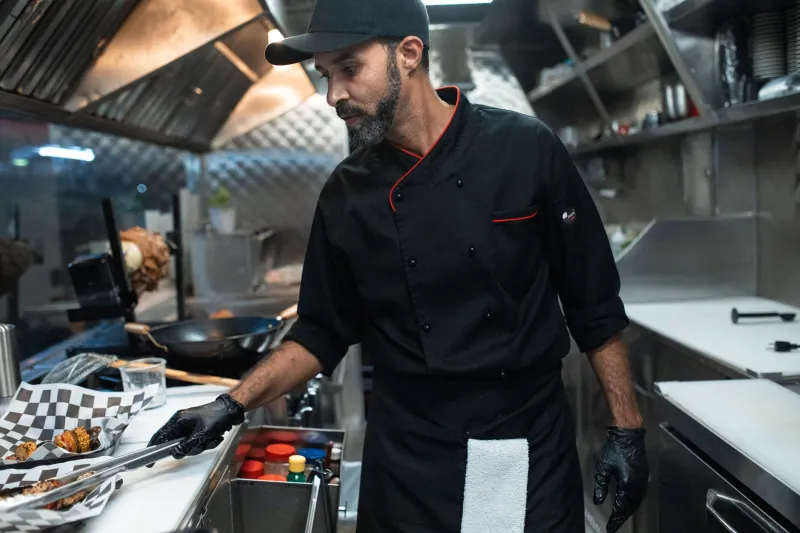
There's a building on the west side of Lansing that used to smell like fryer oil and loyalty points. The drop ceilings are gone now. So are the laminated menus and the branded color scheme that told you exactly what you were getting before you even walked in the door. In its place: exposed brick, a chalkboard specials list that changes twice a week, and a line out the door on Friday nights.
This is what the next chapter of Lansing's food scene looks like — and it's being written inside the bones of corporate America's leftovers.
The Bones Are Good (Even If the Vibe Was Not)
When a chain restaurant closes, it leaves behind something surprisingly useful: infrastructure. Grease traps, commercial hood systems, walk-in coolers, plumbing already built for volume. For an independent restaurateur who'd otherwise be staring down a gut renovation, that's not nothing — that's a head start.
"Everyone kept telling me to find a blank canvas," says Marcus Webb, who opened his farm-to-table breakfast spot Fieldwork Table inside a former fast-casual Mexican chain location near Michigan Avenue. "But blank canvases cost a fortune to build out. I wanted something with bones I could work with."
Webb spent six months stripping the space down to what mattered and rebuilding the identity from scratch. The drive-thru window? Sealed up. The corporate signage? Long gone. The commercial kitchen layout, though? That he kept almost entirely intact. "The hood system alone would've cost me forty grand to install new. Walking into a space that already had one changed my whole math."
Erasing the Ghost of Menus Past
Of course, taking over a chain space isn't just a construction project — it's a perception battle. Lansing diners have memories. They remember what used to be there, and those associations don't disappear the moment a new sign goes up.
That's something Priya Nair dealt with head-on when she opened her modern Indian kitchen, Haldi, in a spot that had previously housed two different chain concepts in under a decade. "People would walk by and say, 'Oh, that place never lasts,'" she recalls with a laugh. "Like the building itself was cursed. I had to make them forget everything that came before."
Her strategy was aggressive community engagement before she ever flipped the open sign. Pop-up dinners in the parking lot. Soft-launch tastings for neighbors. A social media presence that documented every stage of the renovation, inviting the neighborhood into the transformation. By the time Haldi officially opened, there was already a waitlist.
"You can't just replace a chain with an indie spot and hope people figure it out," Nair says. "You have to tell the story louder than the old story."
Local Sourcing as a Statement
One of the clearest ways these new operators are differentiating themselves from their corporate predecessors is through sourcing — and they're not shy about making that part of the brand.
At Fieldwork Table, Webb prints the names of his suppliers directly on the menu. Eggs from a farm in Eaton County. Bread from a local bakery run out of a renovated warehouse space downtown. Greens from a grower he's been buying from since his catering days. "When people see a recognizable name on the menu — a farm they've driven past, a baker they follow on Instagram — it hits different than 'locally sourced whenever possible,'" he says. "That's the corporate version of caring. We're trying to do the actual thing."
Nair takes a similar approach at Haldi, working with Michigan-grown produce wherever her menu allows and being transparent with diners about where she's making substitutions and why. "Indian cuisine has such specific ingredients. I'm not going to pretend I can get everything locally. But where I can, I do — and I talk about it."
That transparency, both owners agree, is something chain restaurants structurally can't replicate. Corporate supply chains don't flex for a single location in mid-Michigan. Independent operators can pivot on a Tuesday because a farm called with extra produce.
The Loyal Following Problem (And How They're Solving It)
Building regulars is the lifeblood of any independent restaurant, and it's also the thing that takes the longest. Chains have loyalty apps and national marketing budgets. Local spots have vibes and word of mouth — which, in Lansing, turns out to be pretty powerful.
"Lansing is still a city where people talk to each other," says Webb. "Like, actually talk. I've had tables where someone mentioned us, and the couple next to them overheard, and now that couple comes in every Sunday. That doesn't happen in a lot of places."
Both Fieldwork Table and Haldi have leaned into community programming as a retention strategy. Cooking classes. Private dinners for neighborhood organizations. Partnerships with local breweries for pop-up pairings. The goal isn't just to feed people — it's to become part of the rhythm of their lives in a way that a chain never could.
"A chain wants your transaction," Nair says plainly. "I want your Tuesday night."
What This Means for Lansing
Zoom out a little and the pattern is hard to ignore. Across the city, former chain locations are quietly becoming some of the most interesting places to eat. The reasons are partly economic — commercial rents on already-built-out spaces can be more accessible than raw square footage — and partly cultural. Lansing's appetite for something genuine has been growing for years, and a generation of chefs is ready to feed it.
It's also a story about what a city looks like when it starts believing in itself. For a long time, Lansing absorbed chain after chain because that's what cities do when they're not sure they deserve better. The fact that independent operators are now filling those same spaces with something homegrown isn't just a food trend. It's a signal.
The combo meal is out. The chef's special — sourced local, made from scratch, named after someone's grandmother — is very much in.
And honestly? The line out the door says everything.