Hammer, Heart, and Hustle: Meet the Lansing Homeowners Rebuilding the City One Room at a Time
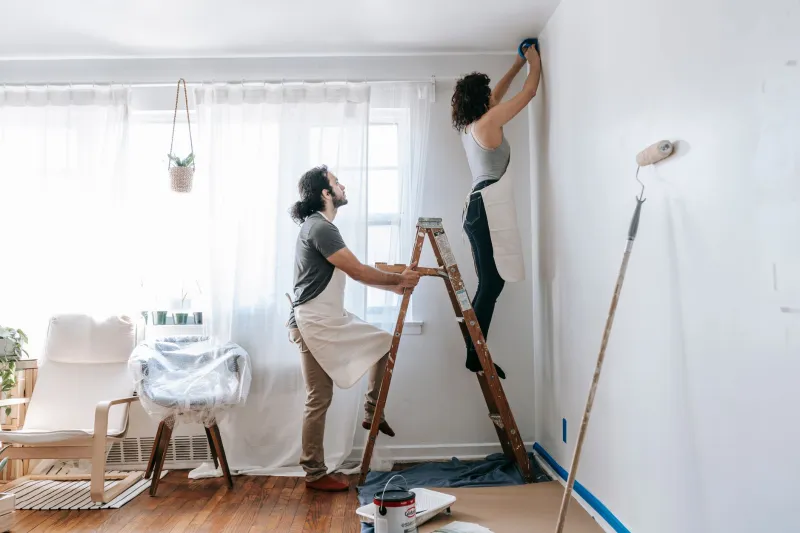
Walk down almost any block in REO Town, Eastside, or the Westside neighborhoods on a Saturday morning and you'll hear it — the whine of a circular saw, the rhythmic thud of a sledgehammer, maybe someone's Bluetooth speaker blasting classic rock from a gutted kitchen. Lansing's DIY renovation scene isn't exactly new, but lately it feels like it's hit a different gear entirely.
Affordable entry prices, a deep well of community knowledge, and a city that genuinely rewards people willing to bet on it — those are the ingredients fueling what some locals are calling a residential transformation hiding in plain sight.
Why Lansing? Why Now?
The math is hard to ignore. Lansing consistently ranks as one of the most affordable mid-sized cities in the Midwest for homebuyers. Fixer-uppers in neighborhoods like Moores Park or Groesbeck can still be had for well under $100,000, a number that sounds almost fictional to anyone who's recently tried to buy in Detroit or Grand Rapids.
"I paid $67,000 for a house that needed everything," says Marcus Webb, a 34-year-old graphic designer who bought a 1920s Craftsman bungalow in REO Town three years ago. "In any other market, that same house in that same condition would've been $250K minimum. Here, I had room to actually fix it up right."
Marcus spent the first year doing what he calls "survival renovations" — fixing the roof, updating the electrical panel, replacing a furnace that he suspects was original to the Eisenhower administration. But somewhere around month fourteen, the project shifted from necessity to obsession. He's now on his second complete bathroom gut and recently finished a kitchen that genuinely stops people in their tracks.
"I watched probably 400 hours of tile-setting videos," he laughs. "My partner thought I'd lost my mind. But honestly? I'm really good at tile now."
The Contractor Connection
Not everyone is going full solo, and that's actually part of what makes Lansing's renovation culture interesting. There's a collaborative middle ground emerging — homeowners who do the demo and finish work themselves but bring in local tradespeople for the technical heavy lifting.
Jenny Kowalski has run a small general contracting operation out of Lansing for eleven years. She's watched the DIY wave firsthand and has mixed feelings about it, though mostly positive ones.
"The homeowners who come in educated are a joy to work with," she says. "They've done their research, they understand what they're asking for, and they're not shocked by real costs. What I've seen change in the last few years is that more people are genuinely invested in doing things the right way, not just the fast way."
Jenny says she's been busier than ever, particularly with jobs that blend professional work with owner-contributed labor — a model sometimes called "sweat equity contracting" that lets buyers stretch renovation budgets significantly further.
"Someone does their own demo, primes their own walls, handles their own cleanup — that can save them thousands and free up budget for better materials or more skilled work where it counts," she explains.
The Maker Culture Factor
Lansing has always had a strong maker streak. Between the university crowd, the automotive heritage, and a general Midwestern orientation toward building and fixing things yourself, the city has genuine DIY DNA. What's shifted recently is how connected that community has become.
Facebook groups dedicated to Lansing home renovation have thousands of members. Local hardware stores — particularly the independents — have become informal community hubs where advice gets traded alongside lumber. And events like Lansing's various neighborhood association meetups have started doubling as impromptu renovation swap meets, where people trade surplus tile, leftover paint, and hard-won wisdom.
"I got my kitchen cabinets from a guy three streets over who was redoing his whole house," says Dara Okonkwo, who bought a duplex near Michigan Avenue last year as her first investment property. "Paid almost nothing for them. They were solid wood, just needed refinishing. That kind of thing happens here all the time."
Dara is part of a growing cohort of younger buyers treating Lansing's affordable housing stock not just as a place to live but as a genuine wealth-building opportunity. She lives in one unit of her duplex while renting the other, using the rental income to fund ongoing renovations.
"It's slow," she admits. "But it's mine. And every improvement I make, I'm building something real."
The Neighborhoods to Watch
Real estate observers point to a handful of Lansing zip codes where the renovation energy is most concentrated. REO Town remains a hotbed, building on the commercial revitalization that's already transformed its main corridor. The Eastside, long underappreciated, is drawing buyers who want walkability and historic housing stock at prices that still make sense. And pockets of the Westside near Waverly Road are quietly attracting investors who see the same trajectory those other neighborhoods were on five years ago.
"People who bought in REO Town in 2016 look like geniuses right now," says local real estate agent Tom Ferraro. "The buyers I'm seeing today in some of these other neighborhoods? I think they're going to feel the same way in a few years."
Tom is careful to note that Lansing's market remains genuinely accessible — this isn't a story of rapid gentrification pricing people out. But it is a story of a city gradually recognizing its own value, one renovation at a time.
It's More Than Just Equity
Talk to enough of these homeowners and you start to notice something beyond the financial calculus. There's a pride in this work that runs deeper than square footage and resale value. People are putting themselves into these houses — their taste, their weekends, their learning curves, their mistakes — in a way that feels increasingly rare in a world of cookie-cutter new construction.
Marcus Webb puts it simply: "This house knows me now. And I know it. Every weird quirk, every fix I bodged and had to redo, every room I got right — it's all in here."
In a city with as much history built into its walls as Lansing, that kind of relationship with a home feels exactly right.