Holding the Block: Meet the Lansing Landlords Who Refused to Walk Away
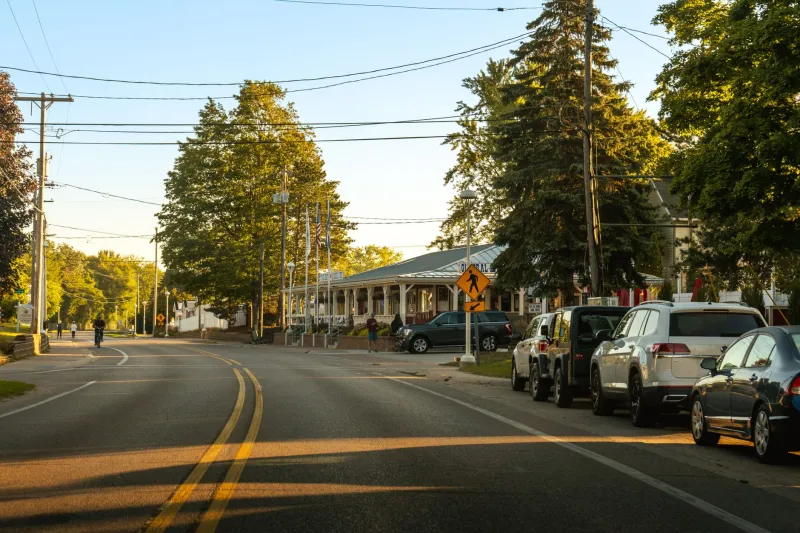
There's a version of this story that writes itself — absentee landlords, neglected properties, neighborhoods left to fend for themselves. Lansing has seen that movie plenty of times. But there's another story playing out right now, a quieter one, happening block by block in places like REO Town, the Westside, and the patchwork streets south of Michigan Avenue. It's about the landlords who stayed.
Not the big developers with glossy renderings and press releases. We're talking about the individual property owners — people who own two buildings, or five, or maybe just one — who looked at a crumbling duplex or a long-vacant storefront and decided to put their money back in instead of taking it out. Their reasons vary. Their methods differ. But their impact on which parts of Lansing come back — and how — is more significant than most people realize.
"I Grew Up Two Streets Over"
Darrell Hutchins owns four rental properties in the Westside neighborhood, all within a half-mile of where he grew up. He bought his first one in 2009, right after the housing crash, when prices were low and most people thought he was making a mistake.
"Everybody thought I was crazy," he says, laughing. "My family thought I was throwing money away. But I knew this neighborhood. I knew the people here. I wasn't going to just let it go."
Hutchins has since renovated all four properties himself, doing most of the electrical and drywall work on his own. He keeps his rents deliberately below market rate — not out of pure charity, he's quick to clarify, but out of strategy. "If I put in a good tenant who can actually afford to stay, I don't have turnover. I don't have vacancies. Long-term, that's better for me and better for the block."
His philosophy is simple: stabilize the immediate surroundings, and the value follows. He's not wrong. Two of his properties have nearly doubled in assessed value since he bought them, and the street they're on looks markedly different than it did fifteen years ago.
The Calculated Gamble on Old Bones
Not every reinvestment story starts with nostalgia. For Priya Mehta, it started with a spreadsheet.
Mehta, who works in finance by day, has been acquiring older properties in REO Town and the Eastside for the past six years. She's upfront about the fact that she approaches it like an investor — but one with a longer time horizon than most.
"Old buildings are risky," she says. "The mechanicals are a nightmare, the windows are drafty, and you're always finding surprises inside the walls. But if the bones are good and the location has momentum, the upside is real."
What she looks for: proximity to walkable commercial corridors, evidence of neighbor-led maintenance ("If the people next door are taking care of their place, that tells me something"), and buildings that have been neglected but not destroyed. She's passed on plenty of properties that looked like deals on paper but sat in blocks she felt had stalled out.
Her current portfolio includes a four-unit on the Eastside that she gutted and rebuilt over 18 months, and a commercial-residential mixed-use building in REO Town that now houses a small creative studio on the ground floor and two apartments above. "That one was a leap of faith," she admits. "But REO Town has real energy right now. I wanted to be part of that."
When Reinvestment Gets Personal
For Marcus and Yvonne Teller, the decision to buy and renovate a deteriorating six-unit apartment building on Lansing's south side wasn't purely financial — it was personal. The couple had rented in the neighborhood for years before buying, and watched as the building sat empty, attracting problems and dragging down the block.
"It was an eyesore, and it was hurting people who lived nearby," Yvonne says. "We kept waiting for someone to do something about it. Eventually we realized we were going to have to be that someone."
They purchased the building in 2021, took out a renovation loan, and spent the better part of two years making it livable. They now rent to a mix of tenants — some long-term residents of the neighborhood, some younger people who couldn't afford places closer to downtown. Marcus handles maintenance himself on weekends.
The couple is clear-eyed about the financial reality. "We're not getting rich off this," Marcus says. "But we're not losing money either. And we're building something. That matters to us."
What they've noticed since the renovation: two neighboring property owners have made visible improvements to their own buildings. One vacant lot nearby was cleaned up. "You put effort in, sometimes it's contagious," Yvonne says.
The Philosophy Behind the Patience
Talk to enough of these landlords and a few themes start to emerge. None of them are waiting on a single big development to save the neighborhood. None of them are expecting the city to do the heavy lifting. And none of them are operating on a two-year flip timeline.
Tom Garvey, who owns three properties near the Verlinden corridor, puts it plainly: "Everyone wants to know when Lansing is going to pop. I stopped waiting for a pop. I just keep making my properties better. That's what I can control."
Garvey has owned in the area since the mid-2000s and has watched several waves of optimism come and go. He's skeptical of hype but genuinely bullish on slow, steady neighborhood improvement. "The blocks that are doing well right now — it's not because of one big thing. It's because a handful of people kept caring about their buildings when it wasn't cool to do so."
He's also thought carefully about what happens when values rise. "I don't want to be the guy who prices out the people who stuck around through the hard years. That's not the kind of landlord I want to be."
What It Adds Up To
Individually, none of these property owners would describe themselves as community builders. They're quick to point out the limits of what they can do, the risk they're carrying, and the work that still needs to happen at a city level. But zoom out a little and the pattern is hard to miss.
The blocks where individual landlords are actively reinvesting — fixing facades, keeping properties occupied, maintaining relationships with tenants — look different. They feel different. And they tend to attract more of the same.
Lansing's comeback, if that's what we're calling it, isn't being written by a single headline. It's being written in permit applications and renovation loans and weekend trips to the hardware store. It's being written by people who looked at a beat-up building in a neighborhood that needed some love and decided to stay in the game.
That's not a flashy story. But it might be the most important one the city has going right now.