Brewing Big Ideas: Inside the Lansing Coffee Shops Where the Next Big Thing Gets Started

There's a corner table at a certain café on Michigan Avenue that has, depending on who you ask, launched a marketing agency, sparked a catering side hustle, and saved at least one freelance career from total implosion. Nobody planned it that way. That's kind of the whole point.
Lansing's independent coffee shops have quietly become something the city didn't know it needed: informal, low-pressure spaces where entrepreneurs, creatives, nonprofit workers, and side-hustlers cross paths, swap ideas, and occasionally change the direction of each other's lives. No membership fee. No scheduled networking event. Just good coffee and the right people showing up at the right time.
More Than Just a Morning Ritual
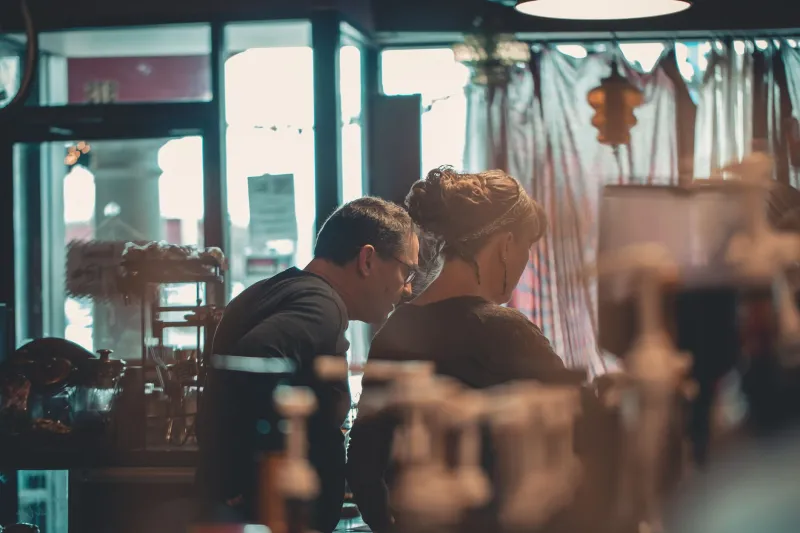
Walk into Cryptid Coffee on a Tuesday morning and you'll find the usual suspects — students with laptops, remote workers on Zoom calls, the occasional retiree with a paperback. But look a little closer and you'll catch something else: the quiet choreography of a city doing its actual business.
In one corner, a graphic designer is walking a restaurant owner through a rebrand. Two tables over, a woman who runs a small HR consulting firm is meeting a potential client she met — where else — here, three weeks ago. The barista, who moonlights as a muralist, just handed her Instagram handle to a guy who's renovating a downtown bar and needs someone to paint the back wall.
This stuff happens constantly, and it happens because independent cafés create what urban planners call "third spaces" — places that aren't home and aren't work, where the usual social scripts loosen up and real conversation can actually happen.
"I've had more useful conversations here than at any Chamber of Commerce event I've ever attended," says Marcus, a web developer who's been working out of a rotating cast of Lansing cafés for the past four years. "There's something about the environment. Nobody's in pitch mode. You just... talk."
The Regulars Who Run the City
Spend enough time at spots like East Lansing's Espresso Royale, the beloved Beaners locations scattered across town, or the newer independent outfits that have been popping up in Old Town and the REO Town corridor, and you start to notice the same faces cycling through. These aren't just coffee drinkers. They're connectors.
Sarah, who co-owns a small event planning company, calls the café near her house her "unofficial office." She doesn't have a coworking membership. She doesn't need one. "My accountant, my florist contact, my social media person — I met all of them here over the last two years," she says. "It sounds almost too casual to be real, but that's exactly why it works. There's no pressure."
That low-stakes energy is something café owners have started to notice and, in some cases, actively cultivate. A few local spots have quietly added longer community tables, better Wi-Fi infrastructure, and extended hours on weekdays — not because they're trying to compete with coworking spaces, but because they've watched their regulars build something real within their walls and want to keep supporting it.
Filling the Gap the Formal Economy Left Open
Lansing has plenty of official infrastructure for business development. There's the Lansing Economic Area Partnership, various incubator programs tied to Michigan State, and a handful of coworking spaces that have opened in recent years. All of it matters. But there's a gap between the person who's not yet ready for a formal program and the person who's already figured it all out — and that gap is enormous.
Coffee shops live in that gap. They're accessible to anyone with $4 for a latte. They don't require a business plan or a pitch. They don't ask you to be further along than you are.
"I wasn't ready to walk into an incubator," admits Deja, who used a REO Town café as her de facto headquarters while she was figuring out whether to turn her custom candle hobby into an actual business. "But I could sit here and think, and I could talk to people, and slowly I started to feel like, okay, this is real. This is something." Her candle company now sells wholesale to three local retailers. She still comes to the same café every Thursday.
That kind of story — scrappy, slow-built, rooted in community rather than capital — is very Lansing. And it says something about the city that the infrastructure supporting it looks like exposed brick walls, a chalkboard menu, and a genuinely good cup of coffee.
What Makes Lansing's Café Culture Different
Not every city's coffee shops function this way. In bigger metros, cafés can feel transactional — you grab your drink, put your headphones in, and disappear. Lansing's independent spots have a different energy, one that regulars describe as genuinely neighborly without being claustrophobic.
Part of it is scale. Lansing is big enough to have real professional diversity but small enough that you actually run into people repeatedly. The graphic designer you met last month shows up again. You remember each other's names. A relationship forms. That compounding effect is hard to manufacture and even harder to replicate in a Slack channel or a LinkedIn DM.
Part of it is also the character of the shops themselves. The independent cafés that have survived and thrived in Lansing tend to be run by people who genuinely care about their neighborhoods — owners who know their regulars, who host open mics and pop-up markets, who put local art on the walls and local pastries in the case. That intentionality creates a kind of gravitational pull for people who share those values, which turns out to be a lot of the city's creative and entrepreneurial class.
The Unsung Economic Engine
Nobody's tracking the deals that get made over cortados in Lansing. There's no metric for the freelance contract signed on a café napkin or the business partnership that started as a conversation about the weather. But that doesn't mean it isn't real, and it doesn't mean it isn't valuable.
If you want to understand how Lansing's economy actually works — not the official version with the press releases and the ribbon cuttings, but the real version, the one built on relationships and hustle and showing up — you could do a lot worse than pulling up a chair at your nearest independent coffee shop and paying attention.
Bring a laptop if you want. But maybe leave the headphones at home.