Gone But Not Forgotten: Why Lansing's Best and Brightest Keep Finding Their Way Back
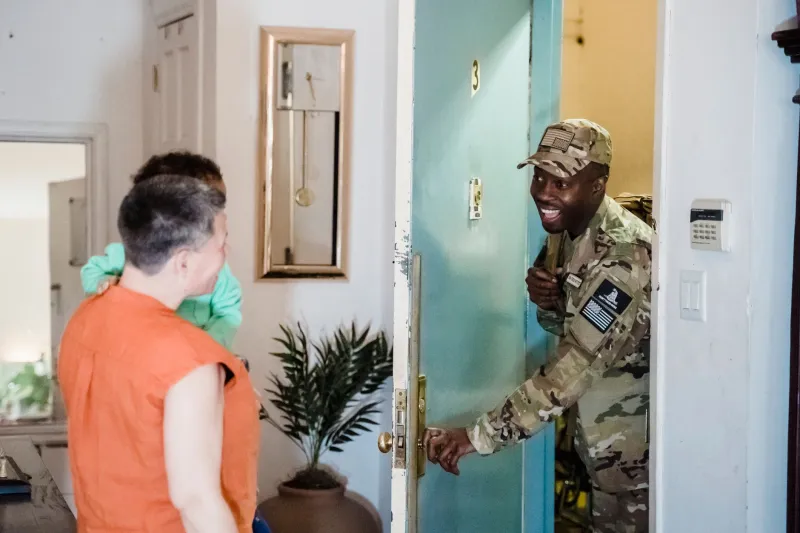
There's a story a lot of Lansing people know by heart. You grow up here, you graduate, and then you go. Chicago, maybe. Detroit. New York if you're feeling bold. You tell yourself it's temporary — just until you get established — and then somehow a year turns into five, and five turns into a decade, and Lansing becomes the place you're from rather than the place you live.
But lately, that story is getting a new ending.
Across the city, a quiet but meaningful shift is underway. Former residents who built careers and lives elsewhere are packing up their apartments and heading back to Michigan's capital. Not out of defeat. Not because things didn't work out. But because, after years away, they looked around at what they'd built — and then looked back at Lansing — and decided they wanted to bring all of it home.
"I Needed to Leave to Understand Why I Should Stay"
Marquise Tanner grew up on Lansing's east side, the kind of neighborhood where everyone knew your name and your mama's name. After graduating from Michigan State, he took a job at a marketing firm in Atlanta, drawn by the salary and the pace and the feeling that he was finally moving up.
For six years, he thrived. He climbed. He learned things about brand strategy and digital storytelling that he never would have picked up staying close to home. But somewhere around year four, something started nagging at him.
"Atlanta is incredible," he says, sitting at a coffee shop in REO Town on a Tuesday afternoon. "But I was building things for other people's cities. I kept thinking about what Lansing could look like if someone was doing this kind of work here."
In 2022, Marquise came back. He launched a small creative agency focused on helping local nonprofits and minority-owned businesses tell their stories online. His client list is already full. "The skills I built out there," he says, "they hit different here because there's so much less competition and so much more need."
The Pandemic Pushed the Door Open
For a lot of returnees, COVID-19 was the inflection point. Remote work dissolved the old logic that said you had to live in an expensive city to have an expensive-city career. Suddenly, people were paying San Francisco rent to work from a one-bedroom apartment — and doing the math on what that same income could look like in a place where a mortgage was actually within reach.
Jenna Kowalski spent eight years in Seattle working in UX design. She loved the mountains, the coffee culture, the energy of the Pacific Northwest tech scene. She also spent roughly 40 percent of her paycheck on rent and ate lunch at her desk because taking a real break felt like a luxury she couldn't afford.
When her company went fully remote in 2020, she started asking herself harder questions. "I called my mom one night and just said, 'What if I came home?' And she started crying. And then I started crying. And honestly that was kind of the whole decision right there."
Jenna moved back to Lansing in 2021, bought a house near the Moores Park neighborhood, and kept her Seattle salary. She's since gotten involved with local tech meetups and mentors students at Lansing Community College. "I feel like I'm actually in my life now," she says. "Before, I was just surviving it."
What They're Building When They Get Back
What's striking about this wave of returnees isn't just that they're coming home — it's what they're doing once they arrive. These aren't people retreating. They're people deploying.
Take DeShawn and Priya Okafor-Mehta, a couple who spent years in Chicago's restaurant industry before returning to Lansing to open a fast-casual spot in Old Town that blends West African and South Asian flavors. DeShawn is originally from Lansing; Priya grew up in East Lansing. They met in Chicago's culinary world and always talked about eventually doing something on their own terms.
"Chicago taught us the craft and the hustle," DeShawn says. "Lansing is where we get to actually do it without a landlord charging us $12,000 a month for a kitchen."
Their restaurant has become one of those places locals talk about in hushed, proud tones — the kind of spot that makes you feel good about your city. And that's exactly the point.
The Reverse Brain Drain Is Real
Urban planners and economists have a term for what's happening in cities like Lansing: reverse brain drain. For decades, mid-sized Midwest cities watched their most educated and ambitious residents leave for coastal metros. Now, some of those residents are coming back — older, more experienced, and often more committed to their hometowns than they ever were when they lived there.
Lansing has some structural advantages in this equation. Housing is affordable by almost any national comparison. The food scene has genuinely leveled up over the past decade. There's a creative energy in neighborhoods like REO Town and Old Town that didn't really exist fifteen years ago. And Michigan State keeps producing graduates who have emotional roots here even when they leave.
The city isn't perfect — returnees are often the first to acknowledge the things that still need work, because they've seen what's possible elsewhere. But that outside perspective is part of what they bring back.
"I know what a great public transit system looks like now," says Marquise, laughing. "I'm allowed to want that for Lansing too."
Coming Home Isn't Giving Up — It's Leveling Up
There's still a cultural script that treats leaving as ambition and staying as settling. But the people coming back to Lansing are quietly rewriting that narrative. They're proof that you can build something significant somewhere between the coasts — and that sometimes the most interesting move you can make is the one that brings you back to where you started.
For Jenna, the shift in how she thinks about home has been the biggest surprise. "I used to feel like Lansing was a limitation," she admits. "Now it feels like an opportunity. A real one. And I think I had to leave to finally see that."
Lansing has always been a city that punches above its weight. Turns out, some of its best punchers just needed to train somewhere else first.