Dirt, Neighbors, and Tomatoes: Inside Lansing's Community Garden Revolution
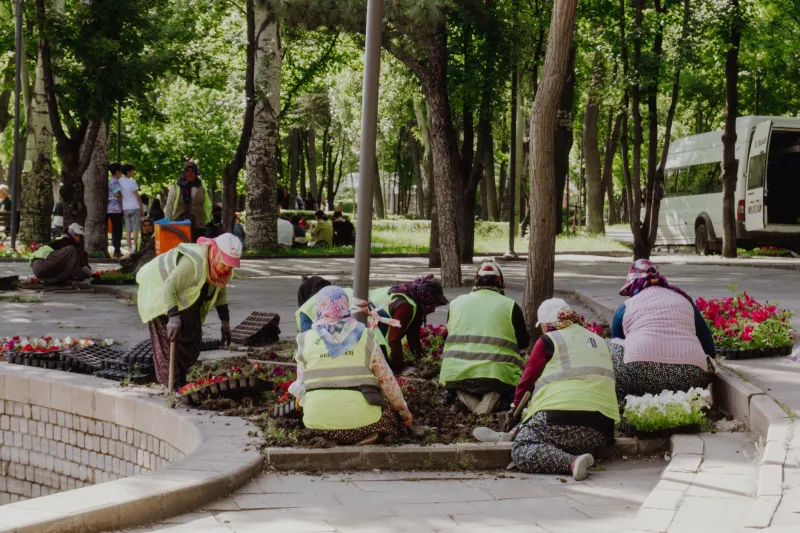
There's a lot on Saginaw Street that used to collect broken glass and fast food wrappers. These days, it collects sunlight. Raised beds run in neat rows where weeds once ran wild, and on a Tuesday evening in late June, a half-dozen neighbors are crouched between the rows, pulling, planting, and swapping stories about their weeks.
This is what Lansing's community garden movement looks like up close — less Instagram-perfect homestead, more messy and wonderful neighborhood project.
From Blight to Beds
Lansing has no shortage of underused land. Like a lot of mid-sized Rust Belt cities, decades of population shifts left behind empty lots scattered through residential blocks — eyesores that attracted dumping and dragged down property values. But over the last several years, a loose coalition of residents, nonprofits, and city planners has been quietly converting those spaces into something genuinely useful.
The City of Lansing currently supports more than two dozen community garden sites through its Parks and Recreation Department, with several more operating independently through neighborhood associations and faith communities. The numbers have climbed steadily since 2018, and local advocates say demand still outpaces available land.
"We have a waiting list that never really goes away," says Marcus Webb, a volunteer coordinator with a Westside community garden that's been operating for six years. "People want to grow things. People want to be outside with their neighbors. The interest is absolutely there."
More Than Just Vegetables
Ask anyone who tends a plot what they're getting out of it, and food usually comes up second or third on the list.
For Diane Okonkwo, a retired schoolteacher who gardens on the north end of town, the appeal is almost entirely social. "I live alone. My kids are in Detroit and Chicago. When I come here on a Saturday morning, I'm going to talk to six people before I even touch a trowel," she says with a laugh. "That's not nothing. That's actually a lot."
Research backs her up. Studies on urban community gardens consistently show measurable improvements in participants' mental health and sense of belonging — outcomes that are particularly significant in neighborhoods that have historically lacked third spaces, those informal gathering spots that aren't home and aren't work.
For younger residents, the gardens are also functioning as a kind of informal classroom. Several Lansing-area schools have partnered with nearby garden sites to bring students in for hands-on learning about ecology, nutrition, and food systems. At one south-side location, a group of middle schoolers recently helped install a rain-collection barrel — a small but tangible lesson in sustainability that no worksheet could replicate.
The Food Security Angle
It would be a mistake to downplay the practical side of things, though. In parts of Lansing that qualify as food deserts — areas where access to fresh, affordable produce is genuinely limited — a community garden plot can make a real difference in a family's weekly grocery bill.
The Capital Area Food Bank has been an active partner in several garden projects, helping connect surplus harvests with local pantries and distribution programs. In a good season, a single well-managed community plot can yield hundreds of pounds of vegetables.
"We talk a lot about food security in the abstract," says one food bank staffer who works with garden partners. "But when someone brings in fifty pounds of zucchini and green beans that they grew themselves and wants to donate half of it — that's the concept made real."
Not every gardener is growing out of necessity, of course. Plenty of participants are middle-income residents who simply want fresh tomatoes and a reason to get outside. But the economic diversity of who shows up is part of what makes these spaces work. They're genuinely mixed-income, multigenerational, and in many cases multilingual — a demographic reality that's harder to engineer and easier to grow.
City Hall Is Paying Attention
Lansing's planning office has started treating community gardens less like a feel-good side project and more like legitimate urban infrastructure. Recent updates to the city's zoning framework have made it easier to establish gardens on vacant parcels, and there's been quiet discussion about incorporating green space goals into broader neighborhood revitalization plans.
"These sites do real work," says a city planner who has been involved in several garden approvals. "They manage stormwater. They reduce urban heat. They give residents a reason to invest in their block. That's not a soft benefit — that's a planning outcome."
The challenge, advocates say, is permanence. Community gardens built on land the city doesn't own are always vulnerable to development pressure. A lot that hosts a thriving garden today could be sold to a private developer tomorrow, and the legal protections for established gardens remain limited.
Marcus Webb has watched it happen. A garden his group spent three years building was displaced when the property owner decided to sell. "We had to start over. And we did. But it's demoralizing," he says. "You want to know your work isn't going to be bulldozed."
What's Growing Next
Despite the uncertainty, the momentum feels real. New garden sites opened in Lansing in each of the last three years, and a recently formed coalition of garden operators has started meeting monthly to share resources, coordinate with the city, and advocate for stronger land protections.
For Diane Okonkwo, the politics are secondary to the pleasure of showing up on a Saturday morning and finding her neighbors already there.
"This city is full of good people who want to do good things," she says, brushing soil off her gloves. "Sometimes you just need a patch of dirt to bring them together."
Hard to argue with that.