Roots Over Rent: Why Lansing Is Winning the War for Creative Talent
There's a version of the creative dream that looks like a cramped Brooklyn apartment, a shared studio with seven other people, and a side hustle waiting tables just to keep the lights on. A lot of artists chased that version. Some still are. But a quieter, steadier migration is happening right now — and it's flowing toward Lansing.
Not away from it.
Talk to enough photographers, muralists, graphic designers, and musicians who've planted roots here in the last few years, and a pattern emerges. These aren't people who ended up in Lansing by default. They made a choice. Sometimes it was after years in a bigger city. Sometimes it was a deliberate skip of the big-city chapter altogether. Either way, they landed here, looked around, and decided this was exactly where they wanted to build something.
The Math Nobody Talks About
Let's start with the obvious stuff, because it matters more than people want to admit.
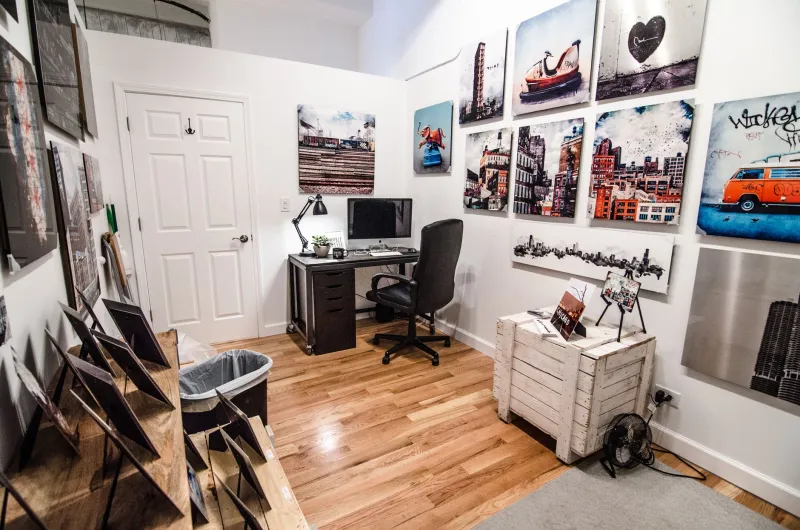
Studio space in Lansing is a completely different financial conversation than it is in cities like Detroit, Chicago, or Minneapolis. Photographers who might be splitting a 400-square-foot shooting space in a bigger metro are renting full, dedicated studios here — with room to spare — for a fraction of the cost. That's not a minor perk. That's the difference between running a sustainable creative business and grinding yourself into the ground.
Jamila Okafor, a portrait and editorial photographer who relocated from Columbus about three years ago, put it bluntly: "In Columbus, I was spending so much energy just managing overhead that I barely had time to actually shoot. Here, I have a real studio, I'm paying less than I was for a shared space, and I've built a client base I actually love. The math finally makes sense."
For graphic designers and illustrators, the calculus is similar. Remote work has untethered a lot of creative professionals from geography entirely, which means the question of where to live has become genuinely open. And when you can work from anywhere, suddenly a city with low cost of living, a real community, and actual breathing room starts looking a lot more attractive than a high-rent zip code and a two-hour commute.
Less Noise, More Signal
There's something else the numbers don't capture, though — and it might be the bigger draw.
In saturated creative markets, standing out is exhausting. Everyone is competing for the same clients, the same gallery walls, the same editorial opportunities. The signal-to-noise ratio is brutal. Talented people get lost not because they're not good enough, but because there are simply too many talented people fighting over too few spots.
Lansing doesn't work that way.
Marcus Tillman, a graphic designer and brand identity specialist who moved here from Chicago four years ago, describes it as "room to be seen." He'd spent years in Chicago doing solid work that felt invisible in a sea of equally solid work. Within a year of setting up shop in Lansing, he was getting calls from local businesses, nonprofits, and regional companies who were hungry for exactly what he was offering — and weren't drowning in options.
"I went from being one of a thousand designers to being someone businesses actually sought out," he said. "That shift changes everything about how you work and how you feel about your work."
It's not that Lansing lacks talented creatives — it's full of them. But the ecosystem here has space for more, and the community tends to lift people up rather than treat every peer as competition.
The Community Factor
Ask any creative who's settled here what surprised them most, and the answer is almost always the same: how connected everything feels.
The Lansing creative community is small enough that people actually know each other — photographers collaborate with graphic designers, musicians work with visual artists on album art and show posters, muralists get tapped by local business owners who heard about them through a friend of a friend. There's a genuine ecosystem of cross-pollination happening, and it's generating work that's more interesting and more community-rooted than what tends to come out of bigger, more siloed scenes.
Sofia Reyes, a muralist and mixed-media artist who grew up in Lansing, left for Detroit in her early twenties, and came back in her thirties, describes the return as a homecoming she didn't expect to feel so right. "When I was younger, I thought leaving was the only way to be taken seriously as an artist. But what I found when I came back was a community that actually wanted to invest in local artists. There are walls to paint here. There are clients who want original work. There are people who show up to openings and actually buy things."
That investment runs in both directions. Creatives who choose Lansing tend to give back to it — teaching workshops, mentoring younger artists, collaborating with schools and nonprofits. The scene feeds itself.
What Lansing Is Still Building
None of this means Lansing is a finished product. The city's creative infrastructure has real gaps — more dedicated gallery space would help, a stronger pipeline connecting local artists with regional and national opportunities is still a work in progress, and the nightlife and cultural amenity gap compared to larger metros is real for some people.
But the creatives who've chosen to stay here seem to view those gaps less as dealbreakers and more as opportunities. There's a we're-building-this-together energy that's hard to manufacture in a city that already has everything figured out.
Marcus Tillman summed it up well: "In Chicago, everything was already established. The scene was set. Here, I feel like I'm part of making something. That's actually exciting."
The Bigger Picture
What's happening in Lansing is part of a broader national recalibration. The pandemic accelerated a lot of it — remote work freed up geography, burnout from big-city grind set in for a lot of people, and the appeal of affordable, community-oriented cities started to outweigh the prestige of a coastal zip code.
But Lansing's creative migration has its own distinct character. It's not about settling for less. It's about choosing differently — prioritizing sustainability over status, community over competition, and creative freedom over the illusion that bigger always means better.
The artists who are building here are doing serious work. They're running real businesses, making real art, and reshaping what Lansing's cultural identity looks like from the inside out.
And if the city keeps showing up for them the way they're showing up for it, this is only going to get more interesting to watch.