Priced Out of the City They Built: Lansing's Creative Community Fights Back Against Rising Rents
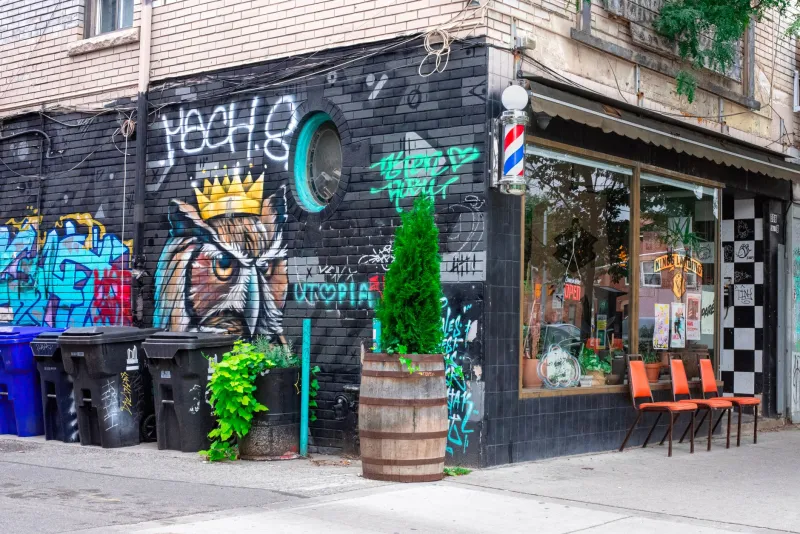
There's a particular kind of irony that stings in Lansing right now. The muralists who painted Old Town's blank walls, the musicians who packed venues on weeknights, the ceramicists and woodworkers who turned dusty storefronts into destinations — many of them are getting letters from their landlords these days. Not thank-you notes. Rent increase notices.
It's a story playing out in creative cities across the country, but it hits different here, in a city that only recently clawed its way back from decades of post-industrial decline. Lansing's revitalization wasn't handed down from a corporate development firm. It was built by people with day jobs and side hustles and a stubborn belief that this place was worth something. Now some of those same people are doing the math and wondering if they can still afford to stay.
The Numbers Don't Lie
According to recent rental market data, average rents in Lansing have climbed steadily over the past three years, with some neighborhoods seeing increases of 20 to 30 percent since 2021. That might sound modest compared to Detroit or Grand Rapids, but for a working artist pulling in $28,000 a year — or a musician who just started booking regular gigs — it's the difference between staying and leaving.
Dana Kowalczyk, a printmaker and part-time art instructor who has lived in the Eastside neighborhood for nine years, says her rent jumped $350 a month when her lease renewed last fall. "I didn't panic at first," she says. "But then I started looking around at what else was available, and I realized there's basically nothing. The affordable stuff is gone or it's in places I genuinely don't feel safe."
She's not alone. Across Lansing's creative pockets — Old Town, REO Town, the Eastside — longtime residents are reporting similar pressure. Some have already left. Others are doubling up with roommates, converting garages into studios, or quietly considering whether Lansing is still the right call.
Who's Actually Buying These Buildings?
Part of the story is straightforward supply and demand. Lansing is a more desirable city than it was ten years ago, and that desirability costs something. But local housing advocates point to a more specific driver: out-of-state property investors who have been quietly scooping up residential and mixed-use buildings across the city, often with little intention of maintaining relationships with existing tenants.
"We're seeing a real shift in who owns property here," says Marcus Tibbetts, a community organizer with a Lansing-based tenant advocacy group. "It used to be mostly local landlords — people you could call, people who knew your name. Now you've got LLCs from Ohio and Texas buying up blocks at a time. They're not bad people necessarily, but their incentive structure is completely different. They're optimizing for return, not community."
Not every landlord fits that mold, of course. Several small property owners in Old Town say they've tried to hold rents steady for creative tenants, recognizing that the character of their buildings depends on who's in them. "If I fill my units with whoever can pay the most, I'm going to end up with a building full of strangers who don't talk to each other," says one landlord who asked not to be named. "That's not why I got into this."
But goodwill only stretches so far when property taxes rise and maintenance costs climb.
The Ripple Effect Nobody Talks About
When a ceramicist leaves Lansing for a cheaper city, it's not just one person packing boxes. It's the pottery classes she was teaching at the community center. The farmers market booth that won't be there next summer. The studio space she shared with two other artists who now also have to find somewhere new.
Creative ecosystems are fragile in ways that are hard to quantify. They depend on proximity, on informal networks, on the ability to spontaneously collaborate with the person two doors down. When rents push people to the margins — or out of the city entirely — those networks fray fast.
"Lansing's creative scene has always been about density," says Jordan Fells, a musician and booking agent who's been working in the local music circuit for over a decade. "You need enough people in enough places making enough stuff that there's always something happening. If you start losing critical mass, the whole thing gets quieter. And quiet is where scenes go to die."
Fells himself moved from a rental near REO Town to a place further from the core last year after his rent became unmanageable. He says the commute — even by Lansing standards — has changed how often he shows up to things. "It sounds small, but it matters. I used to walk to shows. Now I'm driving, I'm tired, I'm staying home more. Multiply that by a hundred people and you've got a different city."
What Could the City Actually Do?
This is where the conversation gets complicated, because there's no clean policy fix that makes everyone happy. But advocates and urban planners alike point to a handful of tools other mid-size cities have used to protect their creative cores.
One option is artist live-work zoning — designating specific areas where mixed residential and studio use is protected and subsidized, making it harder for speculative investors to flip those properties into standard market-rate housing. Several cities, including Cincinnati and Baltimore, have implemented versions of this with mixed but generally positive results.
Another approach is a community land trust model, where the city or a nonprofit holds land in perpetuity and leases it at below-market rates to qualifying residents and businesses. It's a slower build, but it creates genuine long-term stability rather than temporary relief.
There's also the question of what Lansing does with its own publicly owned vacant properties — of which there are still plenty. Rather than selling to the highest bidder, the city could prioritize affordable creative space as a condition of development deals.
"None of this is radical," Tibbetts says. "Other cities have figured it out. The question is whether Lansing has the political will to treat its creative community as infrastructure rather than decoration."
The People Who Are Staying Anyway
For all the pressure, plenty of Lansing creatives aren't ready to give up on the city. Some are organizing — forming tenant unions, lobbying city council, showing up to zoning meetings in force. Others are getting creative about the economics, pooling resources to collectively lease buildings or barter services to offset costs.
Dana Kowalczyk, the printmaker facing that $350 rent hike, decided to stay. She picked up an extra class at a local community college and renegotiated her lease down slightly after pushing back. It's not a permanent solution, she knows. But she's not ready to leave.
"This city made me," she says. "I came here ten years ago because it felt real and it felt possible. I don't want to just hand that over because some spreadsheet says I should."
That's the Lansing spirit, and it's worth protecting. The question is whether the city's leadership will take it seriously before the people who embody it run out of options.